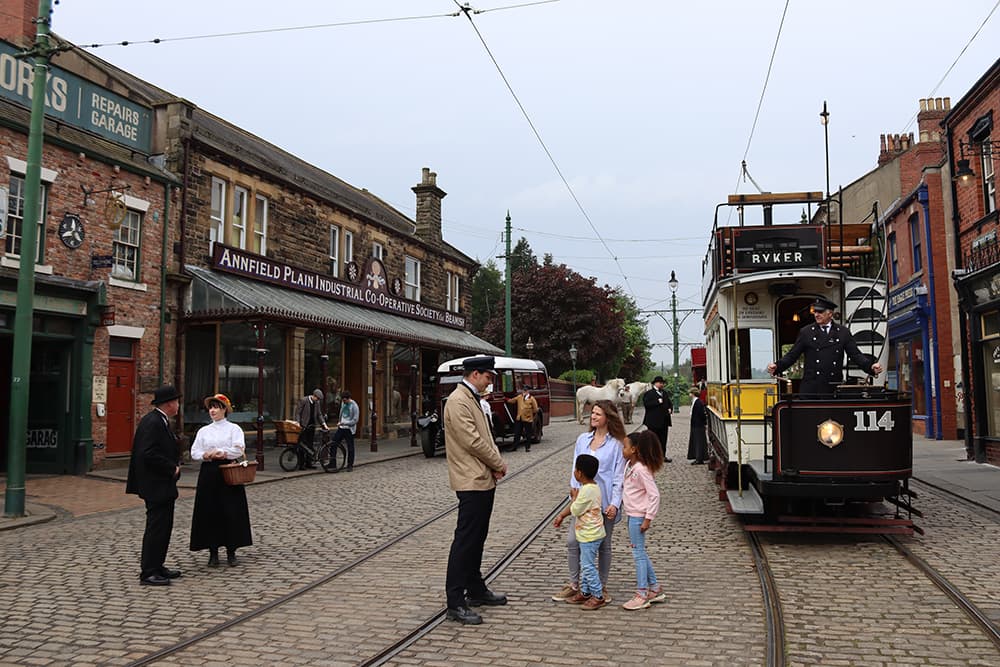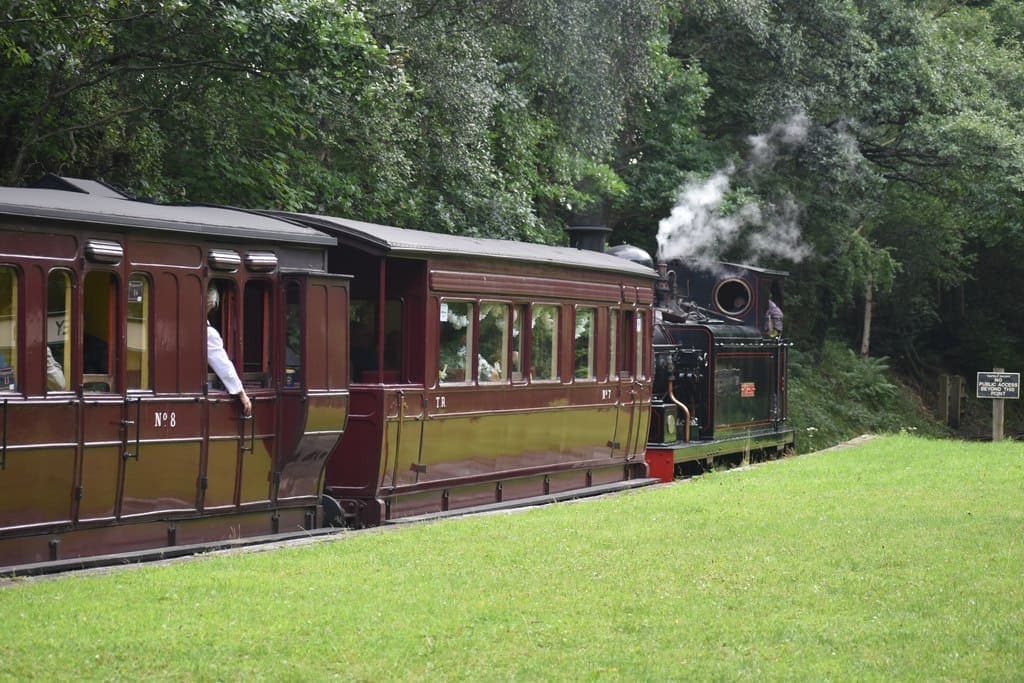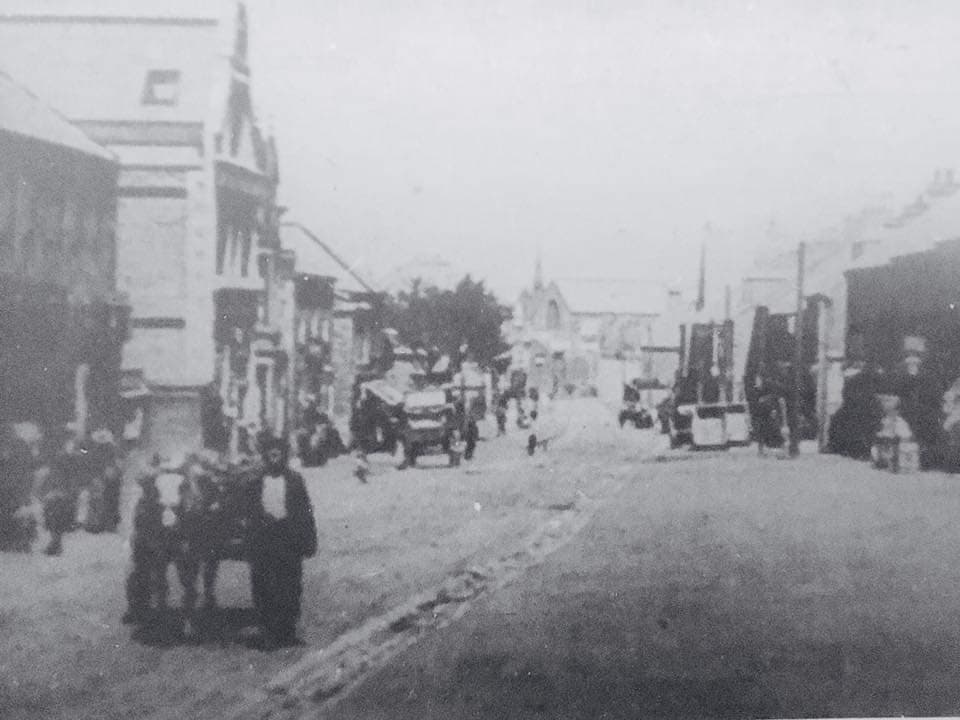
Perched on the hilltop between Chester-le-Street and Consett, Stanley looks today like a fairly typical North Durham town of terraces, housing estates and a long main street. But behind the modern shopfronts is a story that runs from medieval fields, through the height of the coal age, to life as a post-industrial commuter town.
Medieval origins – the “stony clearing”
Stanley’s roots go back at least to the early 13th century. The place is first clearly recorded in an episcopal document issued during the time of Richard Poore, Bishop of Durham (1228–1237), confirming a grant of the “vill of Stanley” to a local landholder.
The name itself comes from Old English: stān (stone) and lēah (woodland clearing or field) – literally “stony clearing”. It’s a good description of the rough upland fields carved out of woodland that early farmers would have worked on this high ridge.
Later, in the 16th and 17th centuries, the settlement appears on county maps by Christopher Saxton and John Speed as “Standley”, a small rural place within a much larger parish. At this point there was no town as we’d recognise it – just scattered farms and a handful of houses on the hill.
Coal and the making of a town
Everything changed with coal. From the late 18th and especially the 19th century, rich seams beneath North-West Durham were opened up. Collieries developed at West Stanley, East Stanley, South Moor, Tanfield Lea, Craghead, Annfield Plain and other nearby villages, drawing in miners and their families from across the region.
What had been three main settlements – West Stanley, East Stanley and South Stanley – gradually merged as rows of miners’ terraces filled the gaps between them. By the late 1800s they were effectively one town, with Stanley acting as the focal point for the surrounding pit villages.
The growth of the coal industry brought chapels, Co-operative stores, pubs, schools and miners’ welfare halls. Railway links such as the Stanhope and Tyne line connected local pits to the Tyne docks and the wider industrial North East, carrying coal out and bringing goods and people in.
West Stanley Pit disasters
Coal provided livelihoods, but it came at a heavy price. Nowhere is that clearer than in the history of West Stanley Colliery – “Burns Pit” to locals.
In the early hours of 19 April 1882, an explosion underground, caused by firedamp ignited by unsafe lamps, killed 13 men.
On 16 February 1909, a far more devastating explosion ripped through several seams of the same colliery. A total of 168 men and boys lost their lives, making it one of the worst disasters in British coal-mining history and the worst in the Northern coalfield.
Funerals took place over several days, with three mass graves at St Andrew’s and St Joseph’s churches. Almost every street in Stanley lost someone; the disaster left widows, orphans and injured survivors throughout the town.
Another serious blow came in 1947 at Louisa Colliery (often called Louisa Morrison) near Annfield Plain, when an explosion killed 22 men. Together, these events are etched deeply into local memory. Memorials across Stanley and nearby parks, along with regular services and centenary events, keep the names of those lost in public view.
Life in a pit town
For most of the late 19th and early 20th centuries, almost everything in Stanley revolved around coal. Colliery companies provided housing; churches and chapels organised choirs, Sunday schools and youth groups; and welfare halls hosted concerts, early cinema shows, libraries and sports.
Local identity was – and remains – closely tied to the pits and to the surrounding villages: Annfield Plain, South Moor, Tantobie, Tanfield Lea, Craghead, Shield Row and others. These communities had their own clubs, bands and teams but came together in Stanley for shopping, markets and civic events.
Decline of mining and new industries
By the mid-20th century the coal industry was in decline. Some Stanley pits closed before nationalisation in 1947; others survived into the 1960s and 1970s before finally shutting. As closures gathered pace, the town’s main source of employment disappeared.
New industries arrived to soften the blow. At Tanfield Lea, just to the north-east, Ever Ready opened a major battery factory in 1968. At its height in the 1970s it employed several hundred local people, including many former miners. But it too suffered from wider economic change and eventually closed in the mid-1990s, removing another large employer from the area.
At the same time, heavy industry in neighbouring towns was also collapsing – most notably the huge Consett steelworks, which closed in 1980. Together, pit closures, factory shutdowns and the loss of steel jobs had a lasting impact on North-West Durham, including Stanley.
Regeneration, reputation and community spirit
From the 1980s onwards, Stanley began to change character. With coal and heavy industry gone, it shifted towards being a service and commuter town, with many residents travelling to work in Durham, Newcastle, Gateshead and beyond. Former pit heaps were landscaped, old railway lines became walking and cycling routes, and new housing estates appeared on reclaimed land.
The town has not had an easy ride. Like many former mining communities, it has struggled with high street decline and negative headlines – including being labelled one of Britain’s “ugliest towns” by a national newspaper. Locals strongly reject that tag, pointing instead to the friendly community, the views across the Derwent valley and the easy access to countryside and coast.
In recent years, there has been a renewed focus on regeneration. County-wide plans aim to reshape town centres, improve public spaces and support local businesses, and Stanley is part of that conversation. At the same time, local groups, churches, sports clubs and heritage societies continue to play a big part in everyday life – from supporting food banks to organising commemorations for pit disasters.
Stanley today – carrying its past into the future
Today’s Stanley is a mix of old red-brick terraces, 20th-century estates and modern developments. It serves as a hub for a wide civil parish that includes Annfield Plain, Tanfield, Craghead, Catchgate, Tantobie and other villages.
What marks the town out is how strongly it remembers where it came from. Memorials to West Stanley and Louisa Colliery, local history trails, school projects and community events all keep the story of coal alive for younger generations.
From its beginnings as a “stony clearing” on a windswept ridge, through its years as a busy pit town, to its current role in a changing North East, Stanley’s history is written into its streets, chapels and memorials – and into the memories of the people who still call it home.
Sources (further Stanley County Durham History reading)
https://www.stanley-tc.gov.uk/our-community/town-history/coal-mining-in-stanley/
https://co-curate.ncl.ac.uk/stanley
https://www.sunnisidelocalhistorysociety.co.uk/burnspit.html
https://nmrs.org.uk/mines-map/accidents-disasters/durham/west-stanley-colliery-explosion-west-stanley-1909/
Northern Mine Research Society